Sydney Children's Hospital, Westmead Redevelopment Envirographics Program
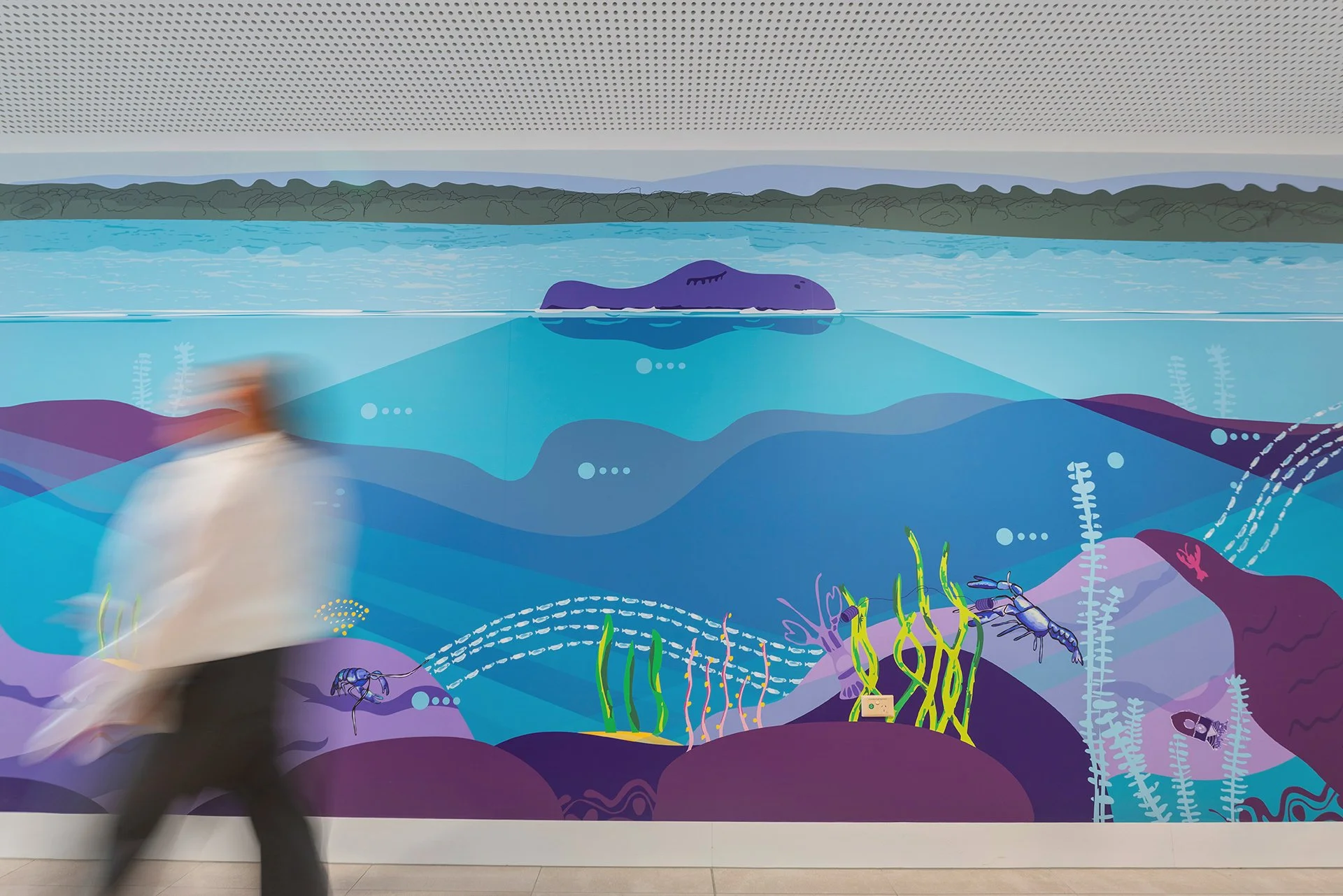
For the Sydney Children's Hospital Westmead Redevelopment Envirographics Program, emphasis was placed on listening deeply to children, families, and clinical staff before translating co-created insights into visual environments to support healing.
-
Co-creation workshops with patients, families and staff within The Children’s Hospital Westmead, Ronald McDonald House, Adolescent Medicine, and Bayanami and Westmead Public Schools.
Engagement with Sydney Children’s Hospital Network Youth Council, Arts, Play and Discovery Working Group, Clinical Users, and Governance Teams.
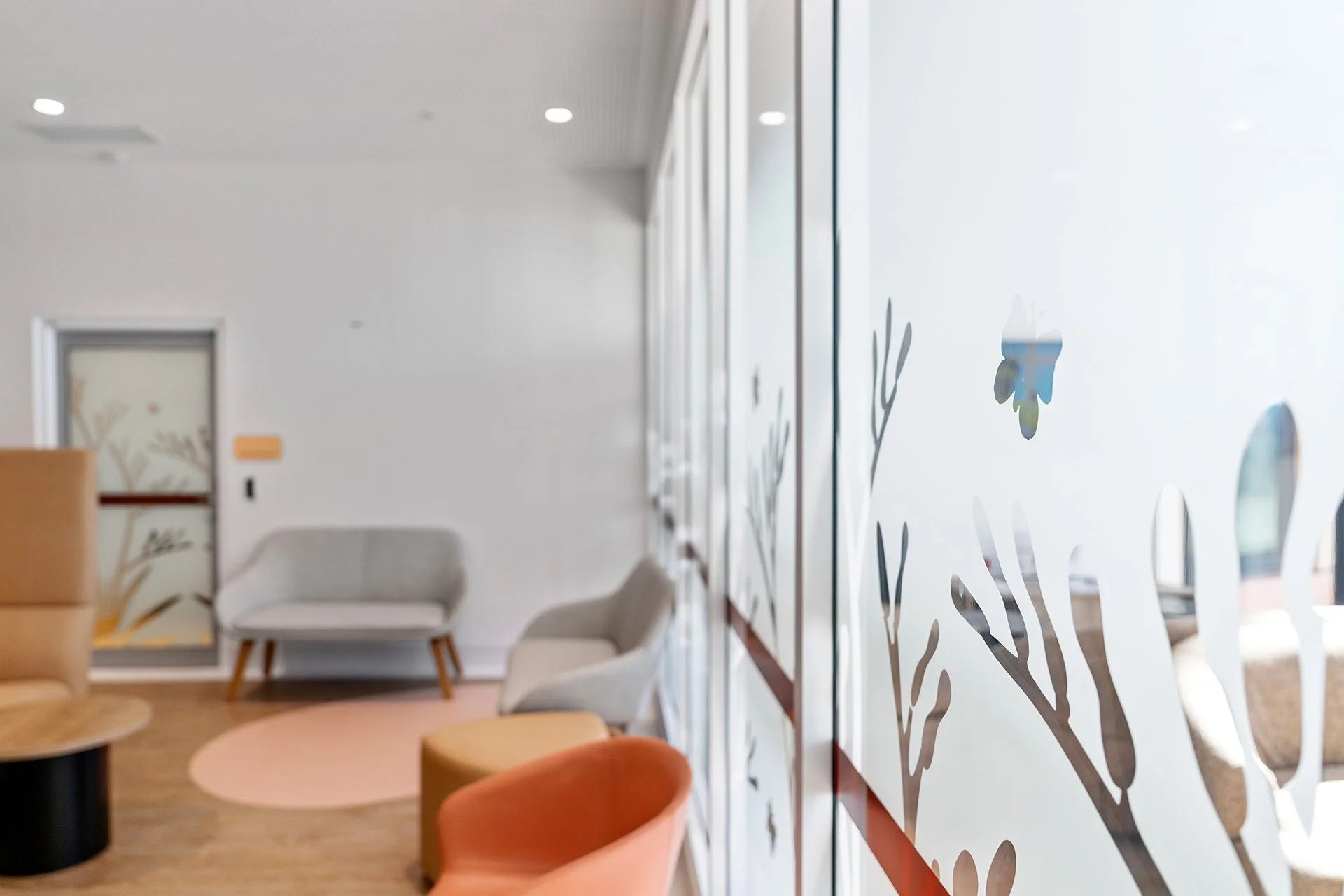
Design and development contributing to 5,000m2 of envirographics
-
July 2024 – February 2026
-
Rach from Minta Viski was commissioned by Health Infrastructure on behalf of the Sydney Children’s Hospital Network.
· Client - NSW Health Infrastructure
· Delivery Partner - Sydney Children’s Hospitals Network
· Project Management - Scyne Advisory
· Builder - Roberts Co.
· Architect & Interior Design - Billard Leece Partnership
· Wayfinding and implementation - Frost* Collective
· Fabricators - Scaffad
-
Biophilic design draws the outside, inside
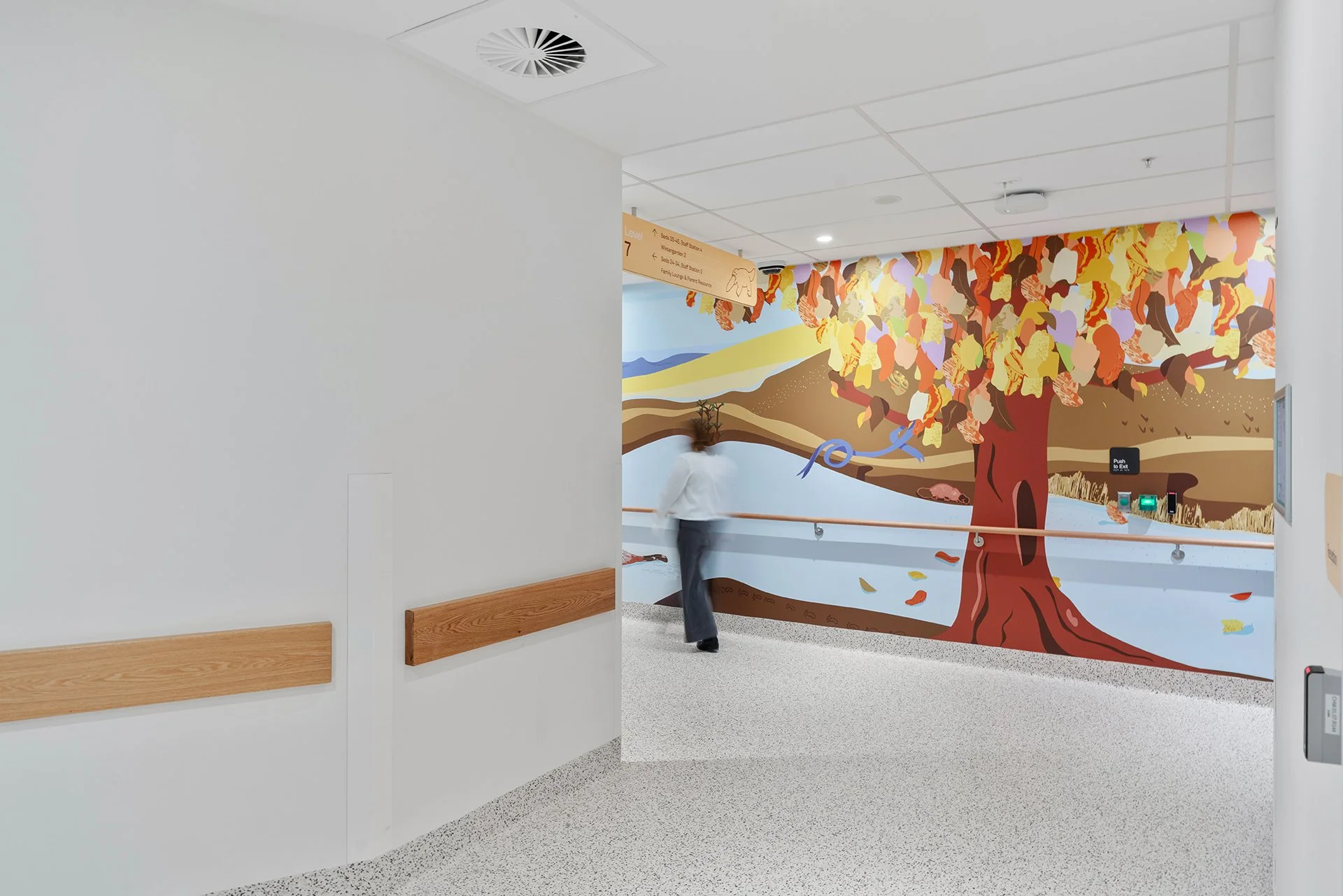
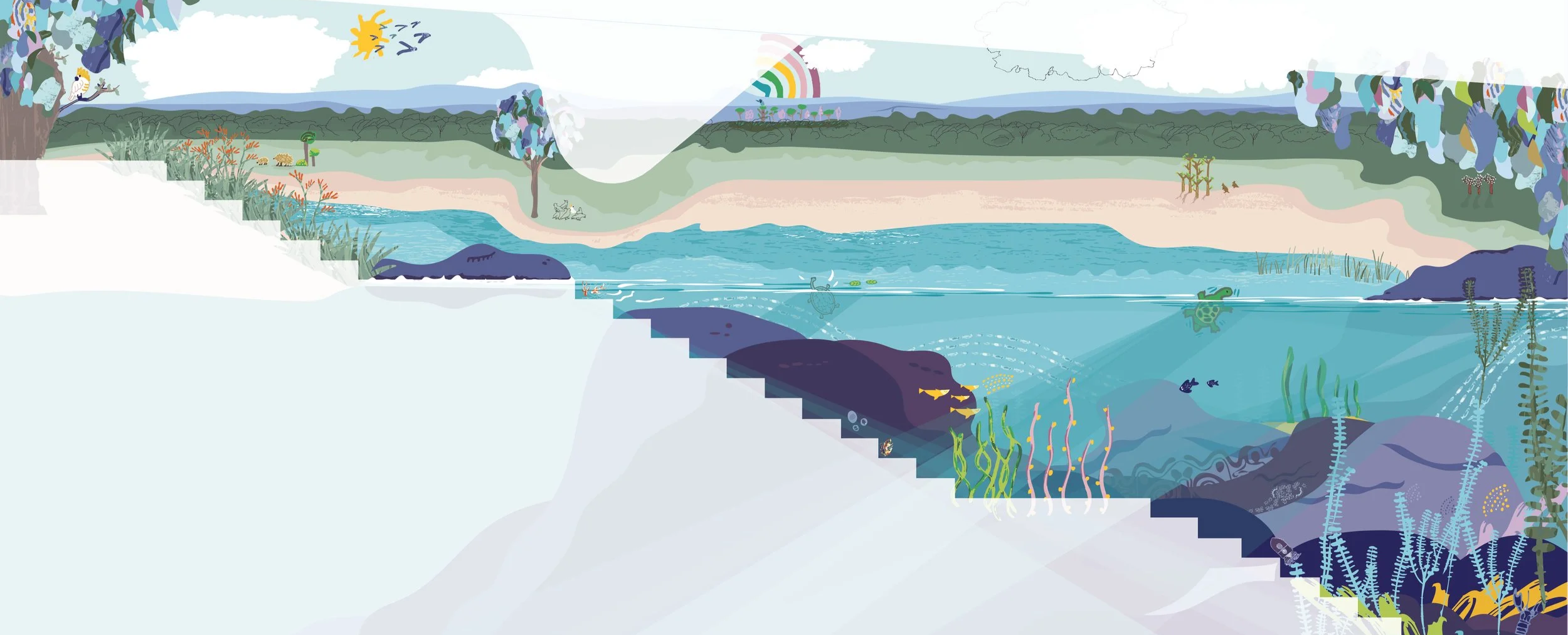
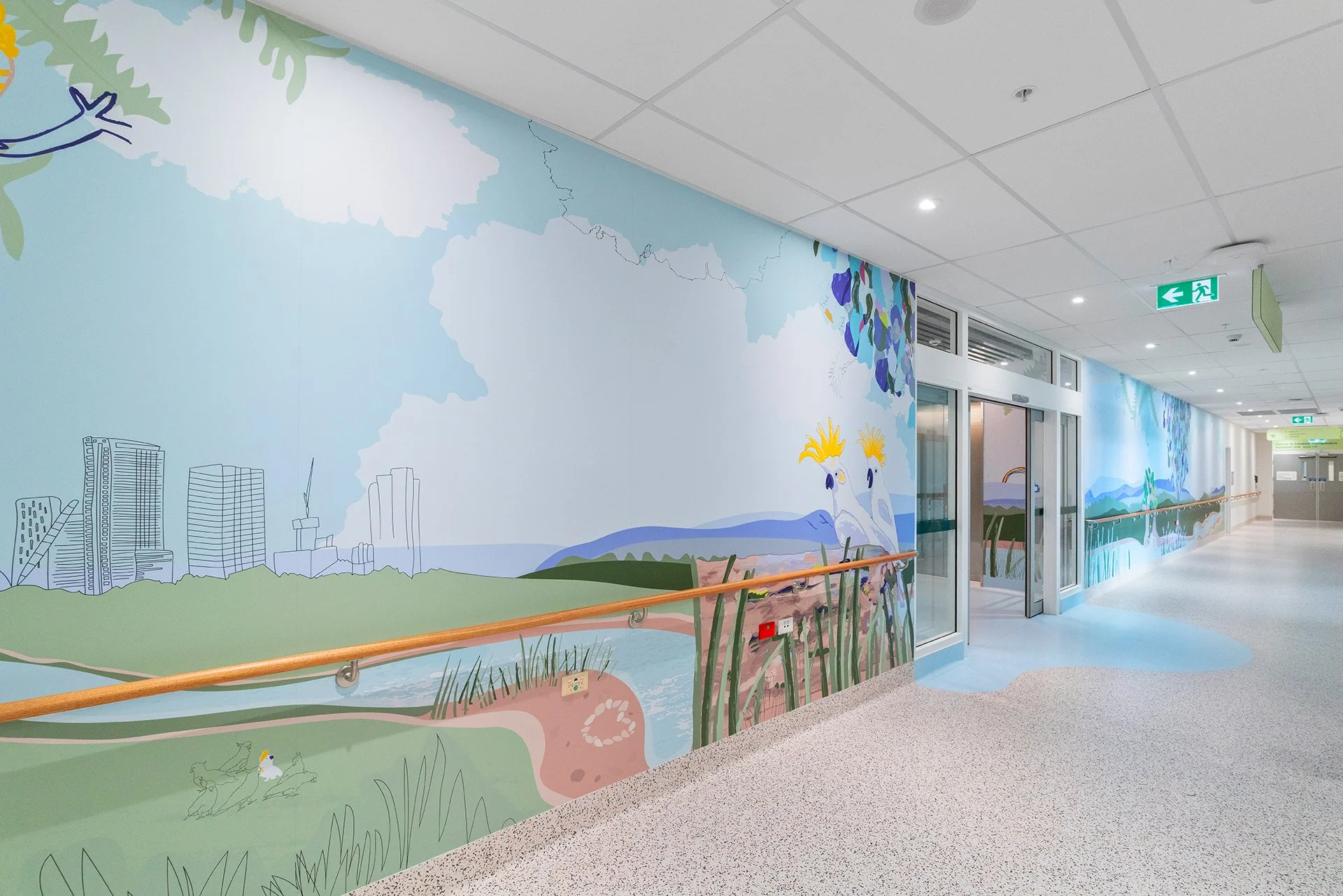
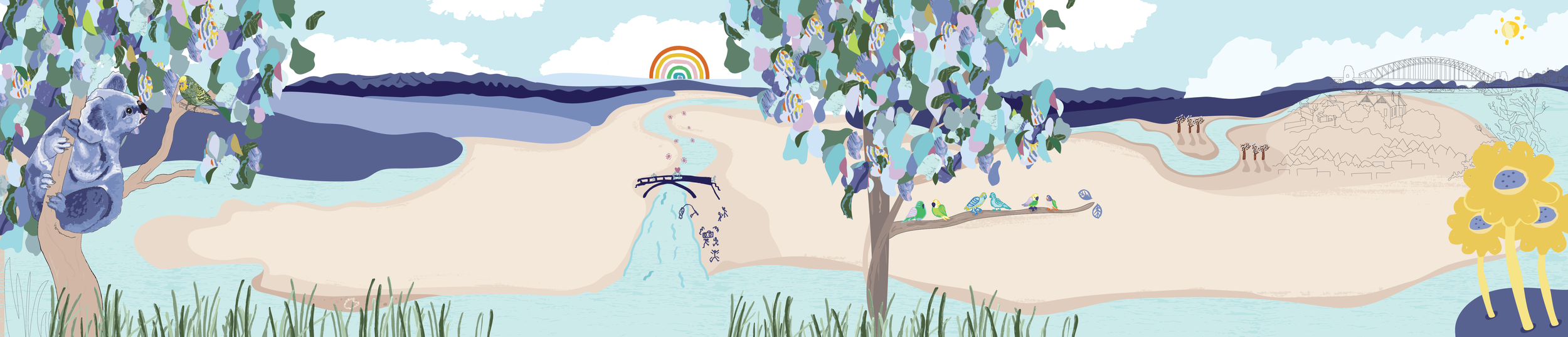
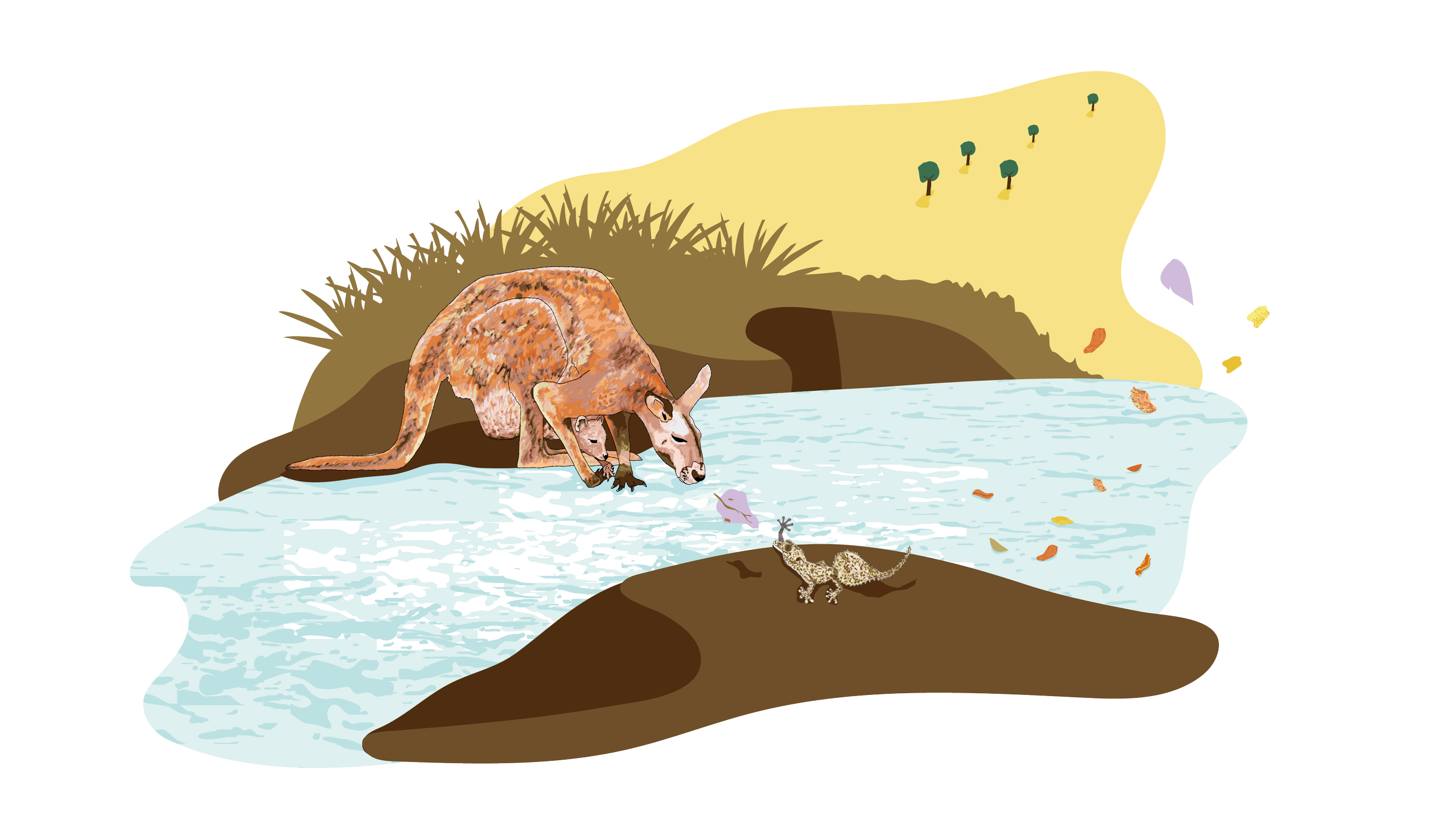
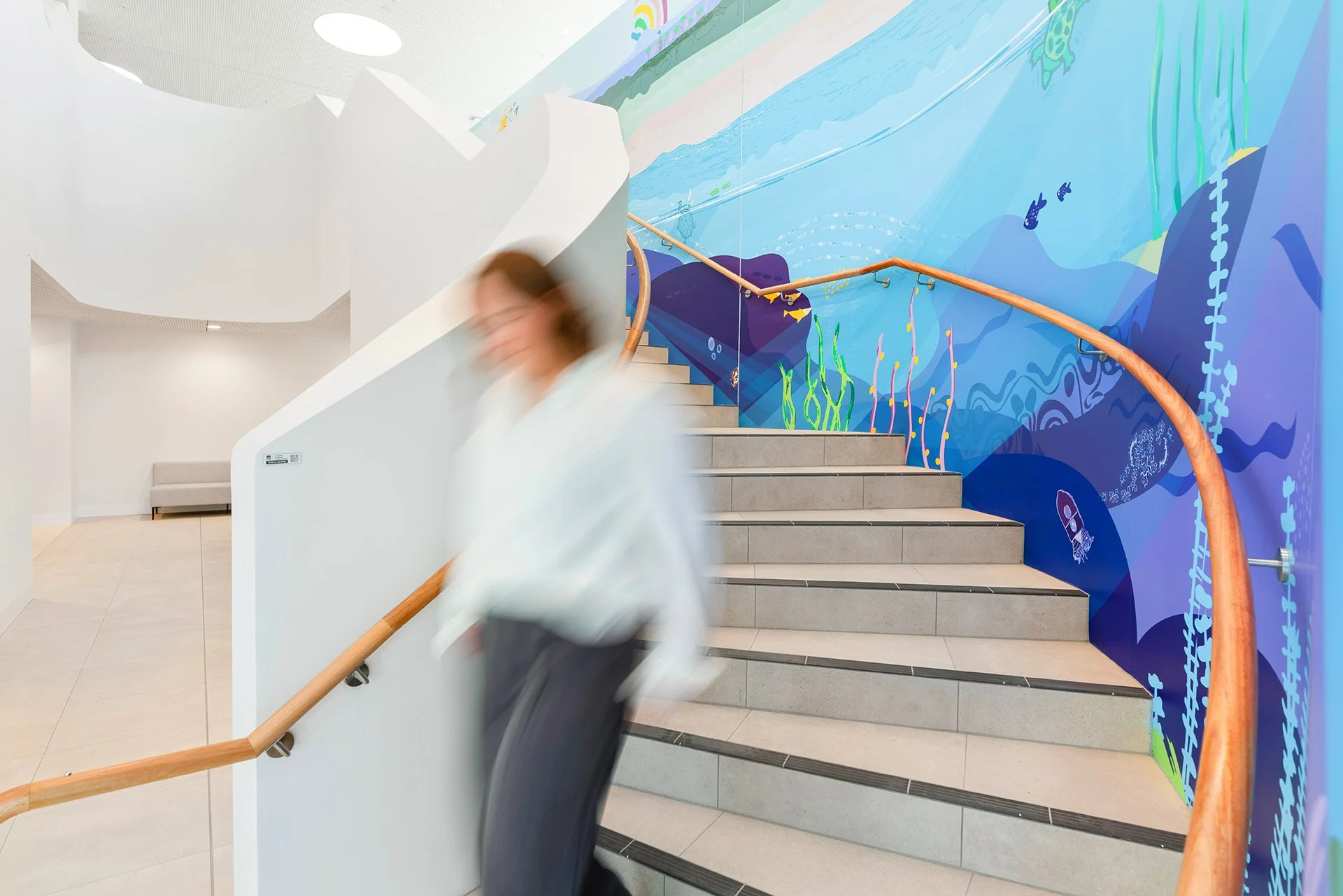
The visual language you can see within the hospital draws from the natural world, specifically the three waterways within Westmead's horizons: Parramatta River, Toongabbie Creek, and Darling Mills Creek. Throughout the 14-levels, children and families encounter the river from multiple perspectives: under, on, and above.
Biophilic design principles connect people to nature within built environments. Research by Upali Nanda and Kathy Hathorn (2008) demonstrates that natural imagery and undulating visual scenes support calm, reduce stress, and contribute to emotional regulation in healthcare settings. This is particularly important for children experiencing medical treatment.
But the work goes beyond creating calm. For children unable to explore outdoors, nature-based imagery offers opportunities for learning and making sense of the world. It invites deeper observation of the local environment, shaping belonging and sense of self even within clinical spaces.
This perspective shaped our responsibility to create work that is inclusive, ethically grounded, and cognisant of people and place.
Co-Creation as Foundation for Timeless Design
When children's actual movement patterns, mark-making, and ways of making sense of the world form the foundation of visual language, the work becomes timeless. Human movement doesn't go out of style.
What mattered in this program was making space for young voices to exist freely. François Matarasso writes in A Restless Art (2019) that "art's importance is easier to see if we consider how children use it as a playroom for coming to terms with their existence."
Working with Ivy Baddock, curator of the Sydney Children's Network, we invited children into co-creation workshops held in hospital spaces, local primary schools, and through consultation with the hospital's Youth Council. Using local themes informed by the interior design strategy, we guided conversations that captured stories, shaped artworks, and documented moments of joy.
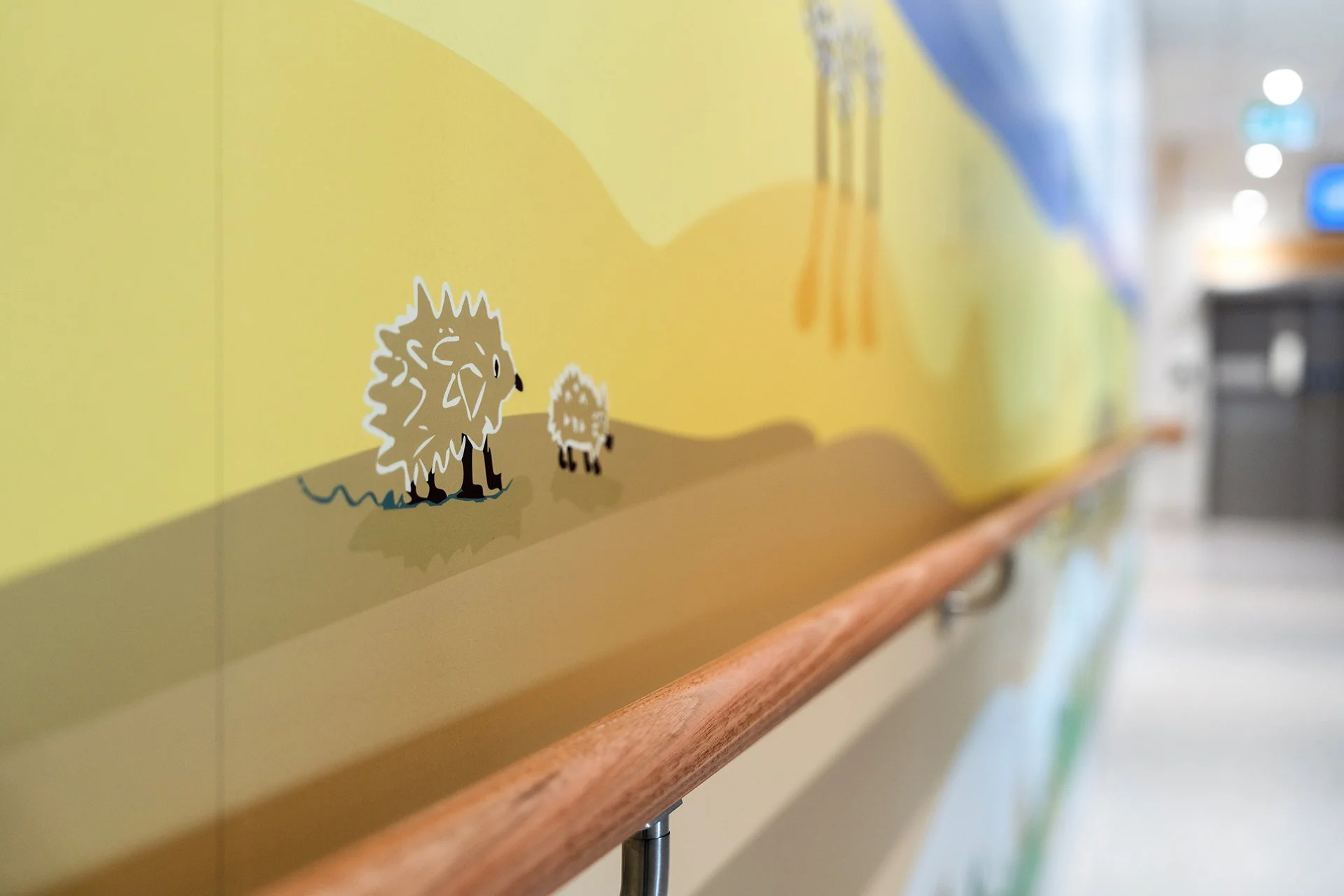
The result: 190 drawings and countless handwritten notes documenting stories about local identity, what it means to feel well, curious superpowers, leaving a legacy, and togetherness. These contributions now live throughout the envirographics as textures, markings, and hero drawings. It’s visual evidence that children shaped this space.
Why Neuroaesthetics Matters: Art's Healing Effects
Research in neuroaesthetics reveals that when children engage with culturally significant places and create their own marks, they activate the Default Mode Network (DMN) building neural pathways that strengthen belonging and connection to place.
Neuroscientist Ed Vessel's research (Vessel et al., 2013, 2019) shows the brain constantly seeks to make meaning: connecting dots, finding patterns, understanding. This happens in the DMN (prefrontal and parietal lobes), which activates during internal reflection and rest.
The artwork is designed to be a supportive presence that allows children's minds moments of rest, recognition, and quiet reflection - critical needs in a clinical environment.
Where Art and Science Meet
Art integrated thoughtfully in healthcare, functions as a bridge. It connects people across cultures, ages, and roles through shared visual language. The narrative informed by co-creation holds emotions without requiring children or families to find words for what they're experiencing.
Professor Daisy Fancourt, director of the WHO Collaborating Centre for Arts & Health, describes arts engagement as "the forgotten fifth pillar of health" alongside diet, sleep, exercise, and nature (Fancourt, 2026). Her research demonstrates that visual environments actively shape patient wellbeing as healing infrastructure. In Art Cure, Fancourt writes: ""…engaging in the arts builds broader psychological resilience to stress, making us better able to weather it.’ (p. 156).
On Reflection
The envirographics offer familiarity when things may feel foreign. Calm in overwhelming situations, and perhaps moments of recognition within a space that feels uncertain.
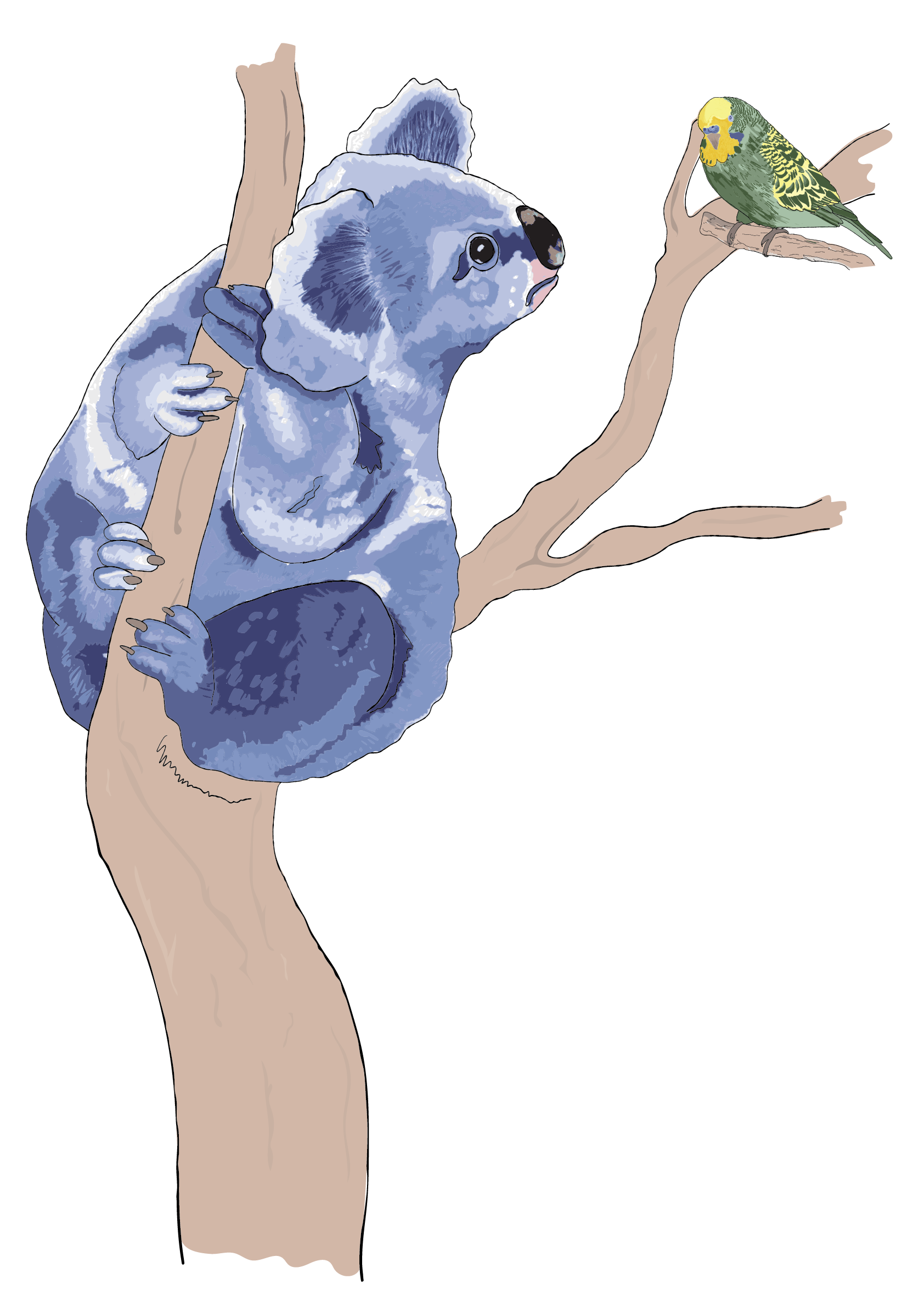
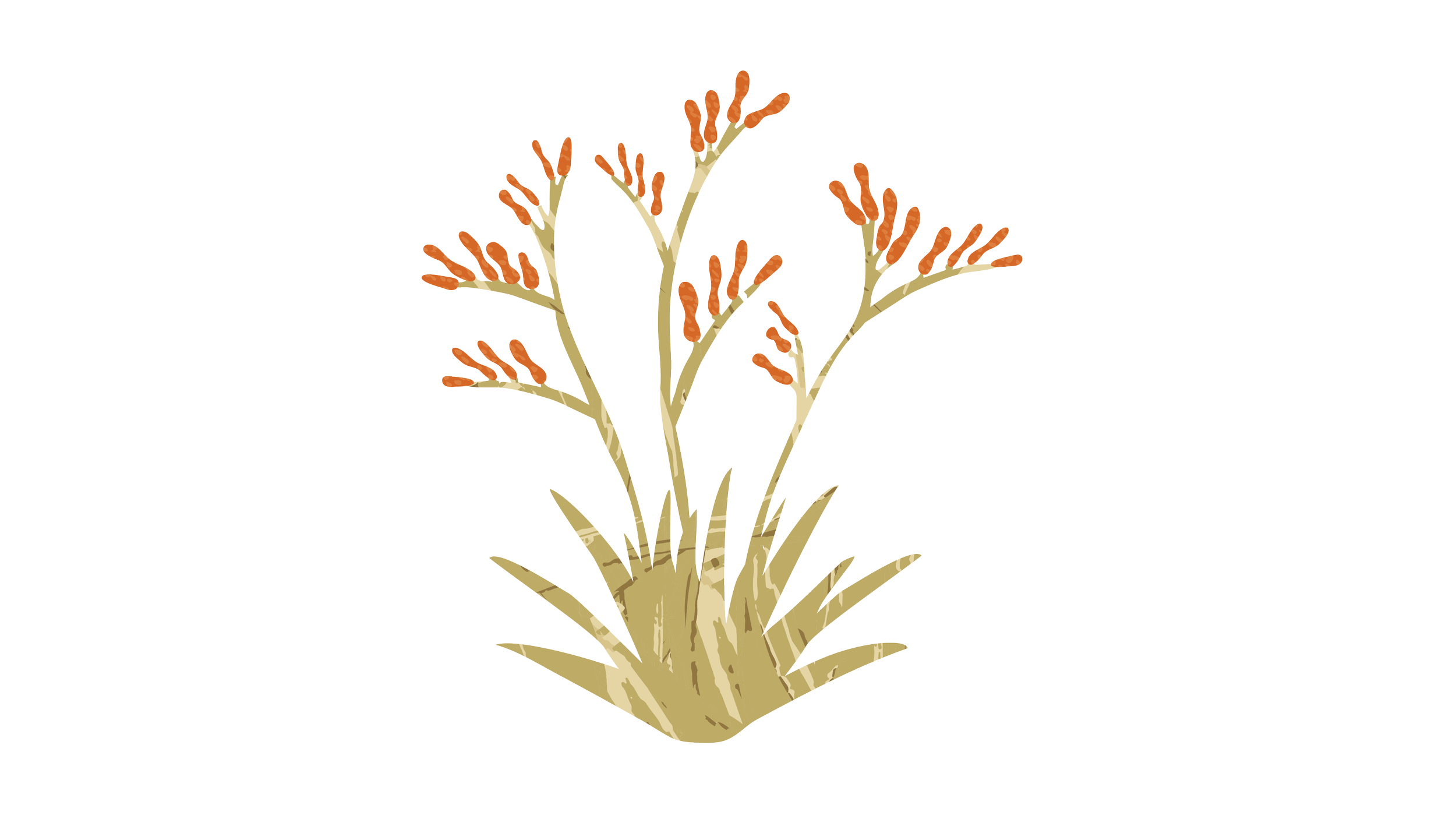
There’s something for everybody. No matter if you’re a toddler holding onto your parent’s hand, or an adult wandering through the wards, you will find different creatures and storylines under the crash rails, hidden gems in places you might not expect, and familiar scenes you may encounter often but not fully appreciate until you’re inside Westmead seeing it through a child’s eyes.
The visual environment now supports models of care, human connection, and meaning-making throughout each child's healing journey.
“What sets this work apart is its foundation in co-creation with children themselves. Rather than imposing adult ideas of what children need, Rach listened deeply and translated young people’s actual ways making meaning into visual language that will remain relevant for generations. The result is transformative. We now have spaces that feel calm, hopeful, and are connected to the families we care for. ”